In the past few months, there have been several theories floating to justify why the Indian stock markets were defying gravity. Among them was a popular notion called 'decoupling'. Armchair analysts and self annointed experts spewed wisdom to say there is decoupling at work. Don't you worry if the Dow or the Nasdaq were crashing, look at the sensex that's where the real story is, they said. If you bought that theory, you'd believe you are living in paradise, where the economy is unstoppable and sensex could continue defy gravity and we'll are all bound to be billionaires. Nothing wrong with this optimism, it is only the dubious basis of the theory that they were peddling that I had a problem with.
For starts, decoupling assumed that the Indian markets were insulated from the mood swings of the US Markets. They argued that Indian markets had matured enough to chart a course of its own. Some sectors, they said, like IT would be affected in the near term, but the broader markets were high and rocking. And then, they threw the cliche, the India growth story is intact, the Indian economic fundamentals are sound and this was stretched to prove that even if the world's largest economy slowed down, it would have negligible impact on India - its economy and its markets. To add credence to this theory, the markets skyrocketed early this year although the US markets made no headway since Jan 1.
And then came Terrible Tuesday!
This theory fell flat on its face on Terrible Tuesday Jan 22,2008. Global markets crashed hand in hand with the US and the facts were there for everyone to see. The moral of the story was the world has started accepting the reality of a US economic slowdown. The Fed chief testified to the Congress that the economy is slowing but he does not see a recession. That was pure semantics. Few days later, President Bush announced a fiscal revival package and Ben followed that up with an unprecendented emergency rate cut, to stem the slide more so in falling sentiment that in stocks. Now, if global markets were reacting, they were not decoupled were they? If the Indian markets tanked 2000 points, it was very much coupled...wasn't it? I am not trying prove a coupling theory which is equally facile.
Now, let's assume the sensex chooses to flirt with higher levels for a week or so when the US markets is tanking. Does that meaning the "coupling" theory is wrong? The point is this day to day corelation does not work and is not a reliable theory to base one's forecast on.
It's the economy stupid
Macroeconomy 101 and Manmohan Singh post-91 have made us understand how interlinked the Indian economy has become. The retail sales figures of Walmart is causing ripples in Tirupur. Poltical instabilty in Mexico is making Mittal postpones his greenfield investment in India. These are hard facts and this is how economies work. Because economies are run by people, who are, even in their dogged pursuits of profits, are swayed by emotion which define their judgements. To believe that economies are impervious to each other, most of all to the biggest, is being naive. To propound it, is foolhardy.
Wednesday, January 23, 2008


Saturday, September 15, 2007
Twenty20

I was among those who had given up on cricket after a series of events broke my trust in the honesty of the game. Then, our humiliating first round defeat in the World Cup convinced me that the game had come to an end, atleast for me. But then arrived Twenty20.
India beats Pakistan
And what a match it was last night! A nail-biting India-Pakistan encounter reminiscent of the famous battles between the two countries at Sharjah in the late '80s. And this was even better. In the 20-over a side, three-hour blitzkrieg, the match was clearly not over, as the cliche goes, until the last ball was bowled. 141 was hardly a target to protect, one thought. But as Pakistan struggled to keep its wickets, you sensed victory in sight. But the Pakistani middle order had other plans in mind. With some swashbuckling batting they brought down the asking target to just 12 runs in the last over. Two boundaries and three later, they dashed India's hopes and had to score just 1 run to scream victory off the last ball. Sreesanth ran in to deliver, with hope in his mind and his heart on his sleeve, the batsman found the fielder and the fielder found the stumps. Run-out. Tie. The first ever in a Twenty20 Indo-Pak match. Then began the bowl out. 5 bowlers from each side take turns to hit the unguarded stumps. India cruised through with all its 3 bowlers - Sehwag, Uthappa and Harbhajan bang on target. Pakistan's respected seamers failed to knock the stumps down even once.
So India won. But has cricket lost?
At first glance, I , like many of my friends, cringed at the idea of Twenty20 cricket. Many purists filled up newspaper columns to defend the purity of the gentleman's game being besmirched by a format for street-urchins. But then, this is tailor-made for television. Think about it. When was the last time you sat through an entire one-day match? This is just 3 hours. It's fast paced, exciting and puts purists' arguments of pitch, weather and wind and the typically Brit pre-match commentary irrelevant. So will ODI die? Of course not. Did Test cricket die because of the ODI? Frankly, we have seen some magnificent test matches quite recently in England. Net net, the game of cricket has evolved. The format may take away its gentle charm as we know it, but it infuses a fresh bubbly energy that is too good to resist. Cricket is back. Atleast for me!
And what a match it was last night! A nail-biting India-Pakistan encounter reminiscent of the famous battles between the two countries at Sharjah in the late '80s. And this was even better. In the 20-over a side, three-hour blitzkrieg, the match was clearly not over, as the cliche goes, until the last ball was bowled. 141 was hardly a target to protect, one thought. But as Pakistan struggled to keep its wickets, you sensed victory in sight. But the Pakistani middle order had other plans in mind. With some swashbuckling batting they brought down the asking target to just 12 runs in the last over. Two boundaries and three later, they dashed India's hopes and had to score just 1 run to scream victory off the last ball. Sreesanth ran in to deliver, with hope in his mind and his heart on his sleeve, the batsman found the fielder and the fielder found the stumps. Run-out. Tie. The first ever in a Twenty20 Indo-Pak match. Then began the bowl out. 5 bowlers from each side take turns to hit the unguarded stumps. India cruised through with all its 3 bowlers - Sehwag, Uthappa and Harbhajan bang on target. Pakistan's respected seamers failed to knock the stumps down even once.
So India won. But has cricket lost?
At first glance, I , like many of my friends, cringed at the idea of Twenty20 cricket. Many purists filled up newspaper columns to defend the purity of the gentleman's game being besmirched by a format for street-urchins. But then, this is tailor-made for television. Think about it. When was the last time you sat through an entire one-day match? This is just 3 hours. It's fast paced, exciting and puts purists' arguments of pitch, weather and wind and the typically Brit pre-match commentary irrelevant. So will ODI die? Of course not. Did Test cricket die because of the ODI? Frankly, we have seen some magnificent test matches quite recently in England. Net net, the game of cricket has evolved. The format may take away its gentle charm as we know it, but it infuses a fresh bubbly energy that is too good to resist. Cricket is back. Atleast for me!
(Picture Courtesy: The Hindu)
Monday, May 14, 2007
DMK - Split Wide Open

There is never a dull moment in Dravidian politics and this time cracks have appeared in the Dravida Munnetra Kazhagam. What triggered this political crisis was a seemingly innocuous opinion poll published by Tamil daily Dinakaran, owned by the Maran fold. The poll found that over 70 per cent of Tamil Nadu preferred MK Stalin as the successor to Karunanidhi, while elder brother MK Azhagiri had an embarrassing 2 per cent support. Enraged by the poll, thugs from the Azhagiri camp ransacked and set the Madurai office of Dinakaran on fire killing three innocent employees. In a swift turn of events, Karunanidhi summoned over a 100 party functionaries for an emergency meeting and decided to strip Dayanidhi off his ministerial badge. Even before the show cause notice reached him, Dayanidhi faxed his resignation to the PMO, phoned Manmohan and Sonia and hurriedly called a press conference to declare his allegiance to his "Thailavar Kalaignar" (Leader Karunanidhi). "I am born DMK man and I will die a DMK man, " he thundered.
Dayanidhi's meteoric rise
Dayanidhi meteoric rise raised many eyebrows within the party and outside but no one dared to question his position. After all, he was part of the family and the inner coterie of Kalaignar. Those who did, like Sharat Kumar, actor and former MP, were thwarted and thrown out. You could not take on the Maran brothers especially when the DMK was in power. Or it seemed.
The real question - Stalin Vs Azhagiri
This is a question that Karunanidhi has warded off for many years. But it is clear that MK Stalin is heir apparent to the throne. Though he does not match his father in terms of charisma, stature or popularity, Stalin is the emperor in waiting. Stalin does not see eye to eye with his elder brother Azhagiri, who has always been the problem child in the family. Azhagiri runs a parallel government in Madurai irrespective of whichever party is in power. Much to Karunanidhi’s chagrin in the past, Azhagiri even engineered the defeat of DMK candidates in the local elections if they were not of his choice. He even has a criminal case against him for the murder of DMK leader T.Kirutinan. So the best Karunanidhi could do was the buy peace with him. Though Azhagiri does not hold a post in the party, all decisions about Madurai has his blessings. For several years, this peace treaty has worked for Karunanidhi. Now that the uncomfortable question that Kalaignar has hitherto kept under wraps is out in the open, will the Azhagiri-Stalin war resume again? Therefore, the fallout of the opinion poll does more damage to Karunanidhi than it does to the Marans or Azhagiri.
Where does it leave the Marans?
For anyone tracking Tamil Nadu politics, this is the missing piece in the puzzle. The Marans had it all going for themselves. Dayanidhi was basking in the glory of bringing investments to Tamil Nadu as the Telecom Minister. Kalanidhi’s media empire was growing at a furious pace. His Sun TV had gone public; he had expanded his grip from television to radio to the print medium. Why, the newspaper in question, Dinakaran, was acquired recently by Kalanidhi. It was relaunched at rock bottom price and was the fastest growing daily in the state. So why would they upset the applecart? There in lies the mystery of this case.
(Picture courtesy: The Hindu)
Saturday, April 7, 2007
Not so special economic zone!

The Govt of India has decided to cap the maximum size of a Special Economic Zone at 5000 hectares. This would mean that larger SEZ projects - such as Reliance's Navi Mumbai project would not be approved. There's more, State Governments can bring down the cap on the maximum size on their whim. This clearly defeats the purpose of SEZs being large standalone islands with state of the art infrastructure. If they are not large, then what's the point? Can't states just be content with IT parks or Industrial townships rebranded as SEZs?
What's so special now about SEZs?
But the real dispute is not about size, It's about land. And, here's the latest - State Governments have been told to stay away from "compulsory" land acquisition. That means, corporates would transact land deals with farmers directly. The Commerce Secretary argues that the process of land acquisition is a "commercial" transaction between a buyer and a seller. Therefore, States will have no role to play in the deal. Let's for a moment buy the Govt's argument that it is just a commercial transaction. If that be the case, why should the Govt bother to cap the size of an SEZ. If there is a willing buyer and a willing seller, why not leave it to them?
Lessons from Nandigram
The Nandigram genocide clearly displayed that land acquisition is anything but commercial. It is not just about finding a right price for a piece of land and ensuring that the cheque reaches the farmer. It is also about rebuilding the farmer's life when he has been uprooted from his home and his industry taken away. And, it is also about generating alternative employment for those hundreds of landless labourers who work on these farm lands on daily wages. Tell me, can the Govt afford to adopt such a hands-off approach and leave it to market forces?
Facts prove that the Bengal Govt bungled on Nandigram. So does this strengthen the case for greater and more effective State intervention or weaken it? Shouldn't it be the responsibilty of the Govt to regulate land acquisition not just in the case of SEZ but also in non-SEZ projects where large scale acquition is involved? Instead of greater regulation and intervention, this Govt has clearly washed its hands off any issue arising out of SEZs. The political backlash of another Nandigram seems too heavy a price to pay for the UPA Government. But wait a minute, wasn't it the same Government that swore about a putting a comprehensive rehabilitation policy in place before approving SEZs?

What's so special now about SEZs?
But the real dispute is not about size, It's about land. And, here's the latest - State Governments have been told to stay away from "compulsory" land acquisition. That means, corporates would transact land deals with farmers directly. The Commerce Secretary argues that the process of land acquisition is a "commercial" transaction between a buyer and a seller. Therefore, States will have no role to play in the deal. Let's for a moment buy the Govt's argument that it is just a commercial transaction. If that be the case, why should the Govt bother to cap the size of an SEZ. If there is a willing buyer and a willing seller, why not leave it to them?
Lessons from Nandigram
The Nandigram genocide clearly displayed that land acquisition is anything but commercial. It is not just about finding a right price for a piece of land and ensuring that the cheque reaches the farmer. It is also about rebuilding the farmer's life when he has been uprooted from his home and his industry taken away. And, it is also about generating alternative employment for those hundreds of landless labourers who work on these farm lands on daily wages. Tell me, can the Govt afford to adopt such a hands-off approach and leave it to market forces?
Facts prove that the Bengal Govt bungled on Nandigram. So does this strengthen the case for greater and more effective State intervention or weaken it? Shouldn't it be the responsibilty of the Govt to regulate land acquisition not just in the case of SEZ but also in non-SEZ projects where large scale acquition is involved? Instead of greater regulation and intervention, this Govt has clearly washed its hands off any issue arising out of SEZs. The political backlash of another Nandigram seems too heavy a price to pay for the UPA Government. But wait a minute, wasn't it the same Government that swore about a putting a comprehensive rehabilitation policy in place before approving SEZs?
Tuesday, March 27, 2007
Exclusive!
We journos love the word 'exclusive' in the context of an exclusive story. It gives us a sense of achievement and euphoria of having information that no one else has. But let me talk about 'inclusive'. You know, it's now fashionable to use the word 'inclusive' in the context of inclusive growth and this whole spiel about bridging the divide between haves and have-nots. On Budget Day, Chidambaram sprinkled the i-word generously in his budget speech, my Editor picked it up for his edit, TV discussions repeated it ad nauseum and all the pink papers included 'inclusive growth' in their post-budget op-eds. In fact, recently, I also read an interesting piece titled The All Important Inclusion .... do check it out.
Now having heard/read all that's been said/written about the importance of inclusive growth, I just have one question: On one hand, this Government claims that it wants inclusive growth. Says it is committed to creating equitable distribution of opportunities. On the other hand, it allows Special Economic Zones that are elitist, well-endowed, tax-less, lawless privileged enclaves of excellence.
Tell me, do you really buy this inclusive story?
Now having heard/read all that's been said/written about the importance of inclusive growth, I just have one question: On one hand, this Government claims that it wants inclusive growth. Says it is committed to creating equitable distribution of opportunities. On the other hand, it allows Special Economic Zones that are elitist, well-endowed, tax-less, lawless privileged enclaves of excellence.
Tell me, do you really buy this inclusive story?
The Left's Not So Right Anymore!

It made riveting television. An event that left the left red faced. The debate in Parliament was on shifting a Maritime University from Kolkata to Chennai. The left accused the Government of trying to clandestinely shift the university (beats me how one can secretly move a darn college!) and "damaaje the intarest of Waste Bengaul." So, tempers flared, voices raised and before an adjournment could be called, our beloved comrades rushed to the well of the house and almost came to blows with their own allies - MPs from the DMK!
Mind you, this is the same political grouping that traditionally takes a moral high ground on everything including 'parliamentary' behaviour. Much to Somnathda's chagrin, Members of Parliament from the left behaved like hooligans that afternoon. While most left leaders have scant respect for TV etiquette, (except Karat and Yechury, but if you have ever seen D.Raja and Dipankar Mukherjee on air, you'll know what I mean) watching them stoop to fisticuffs was a new low. Gurudas Dasgupta was at a loss of words, and that doesn't happen too often to him especially in front of a TV camera, justifying such lumpen behaviour. I just wish a few punches landed on TR Balu. It would've been grand fun! Wonder how Lok Sabha TV does in the ratings game.
(Picture courtesy: ibnlive.com)
Saturday, March 24, 2007
Wednesday, February 21, 2007
This English Yaar!
“Where are you putting up?” asked this petite acquaintance from Delhi. Putting up what? I almost asked. Ah! she meant to ask where was I staying. Dinner table courtesy restricted me from poking fun at her inadvertent faux pas. Starters arrived but the lady refused to stop. After I told where I was “putting” up, she attacked, “So how is the job ‘opPORtunities’ in Mumbai?” I thought of mentioning that if she wasn’t pretty, my old English professor would have used this ‘opportunity’ to skin her alive.
You know …what’s with these Delhi-ites? They are fashionable, I mean they are great when it comes to dressing up well to shop at M-block but their urge to butcher the Queen’s language is much more than their lust for butter chicken. But hang on, there was more murder that evening.
To be fair, she was a well-educated, confident, young woman, an expert in retail banking but had scant respect for pronunciation. “So what do you ‘hair’ in Mumbai? (Read - ’here’) . If she said that in Tamil, she’d be jailed for unparliamentary language. (Tamil abuses and their English skills can be saved for another blog). So, I said, I am splitting hairs over my job ‘here’ in Mumbai.
At main course, it was homicide. “I have to return back to Dhelli imme-jiately. I am taking today evening flight.” The city, my love, is called Delhi with a hard D. Don’t even get me started on “immediately” – that word has been a victim of national torture.
After all this, I was in no mood for dessert. And as we tipped the waiter, came her piece de resistance, “Give me your ‘cuntact.”
My case rests.
You know …what’s with these Delhi-ites? They are fashionable, I mean they are great when it comes to dressing up well to shop at M-block but their urge to butcher the Queen’s language is much more than their lust for butter chicken. But hang on, there was more murder that evening.
To be fair, she was a well-educated, confident, young woman, an expert in retail banking but had scant respect for pronunciation. “So what do you ‘hair’ in Mumbai? (Read - ’here’) . If she said that in Tamil, she’d be jailed for unparliamentary language. (Tamil abuses and their English skills can be saved for another blog). So, I said, I am splitting hairs over my job ‘here’ in Mumbai.
At main course, it was homicide. “I have to return back to Dhelli imme-jiately. I am taking today evening flight.” The city, my love, is called Delhi with a hard D. Don’t even get me started on “immediately” – that word has been a victim of national torture.
After all this, I was in no mood for dessert. And as we tipped the waiter, came her piece de resistance, “Give me your ‘cuntact.”
My case rests.
Friday, May 12, 2006
Sun rises on Fort St George
82-year old Muthuvel Karunanidhi is set to become the Chief Minister of Tamil Nadu once again. He will be anointed for the fifth time as the head of the State, but for the first time ever in the history of Tamil Nadu politics, the DMK will lead a minority government, supported by the Congress, the PMK and the left parties. It has been a decisive victory for the DMK-led Democratic Progressive Alliance that has romped home with 162 seats, leaving Amma way behind with 70 seats.
Lessons learnt
But what’s more interesting are the many twists and turns that we have seen in Elections 2006. In the run-up to the polls, the DPA hoped to repeat the spectacular success that it tasted during Lok Sabha 2004, when it knocked the AIADMK, 40 to none. But it received its first jolt when Vaiko’s MDMK walked out of the alliance and joined hands with Amma. The elections results this time, however, have cut Vaiko down to size. His MDMK has managed to win only 7 seats proving that he is still only a fringe player in Tamil Nadu. Thol Thriumavalavan also has some soul searching to do. His Dalit Panthers have hardly made an impact on the electorate, winning just two seats despite its presence in the State for the past one decade. Even Dr Ramadoss needs to introspect on his party’s performance. Hitherto, he has been cleverly jumping onto winning alliances, but somewhere, his grip on the Vanniar community seems to slip and the need to reach out to larger votebase seems imminent.
Captain Vijaykanth
The big story of victory is that of actor Vijaykanth and his DMDK. Although he has managed to win only one seat (Vridachalam where he contested), the party has made a huge dent on the winning margins across the State. DMDK has made significant inroads in North Tamil Nadu, PMK’s bastion and more importantly, it has eaten into vote shares of parties across the board. For instance, K Anbazhagan, treasurer of the DMK, won his homeground Harbour constituency by an embarrassing 400-odd votes. A DMDK candidate managed to eat into both the DMK’s and the ADMK’s share. In all, an 8.33% voteshare across the State for a first timer is truly commendable.
Moral of the story
Much has been said about the “arithmetic versus chemistry” that titled the voter in favour of one alliance. Also, there has been considerable analysis of the populist promises of rice and colour TVs that both Karunanidhi and Jaya offered. But for me, it’s not the rice, the colour TV or the poll alliance that ticked. The big winner, for me, was clearly the voter of Tamil Nadu. The state had a 70% voter turnout – a clear affirmation of the belief in democracy and in the process of adult franchise. Amma’s ouster is also a loud announcement that people prefer change irrespective of performance of the Government. Change, it seems, is a constant need among the electorate of Tamil Nadu.
Lessons learnt
But what’s more interesting are the many twists and turns that we have seen in Elections 2006. In the run-up to the polls, the DPA hoped to repeat the spectacular success that it tasted during Lok Sabha 2004, when it knocked the AIADMK, 40 to none. But it received its first jolt when Vaiko’s MDMK walked out of the alliance and joined hands with Amma. The elections results this time, however, have cut Vaiko down to size. His MDMK has managed to win only 7 seats proving that he is still only a fringe player in Tamil Nadu. Thol Thriumavalavan also has some soul searching to do. His Dalit Panthers have hardly made an impact on the electorate, winning just two seats despite its presence in the State for the past one decade. Even Dr Ramadoss needs to introspect on his party’s performance. Hitherto, he has been cleverly jumping onto winning alliances, but somewhere, his grip on the Vanniar community seems to slip and the need to reach out to larger votebase seems imminent.
Captain Vijaykanth
The big story of victory is that of actor Vijaykanth and his DMDK. Although he has managed to win only one seat (Vridachalam where he contested), the party has made a huge dent on the winning margins across the State. DMDK has made significant inroads in North Tamil Nadu, PMK’s bastion and more importantly, it has eaten into vote shares of parties across the board. For instance, K Anbazhagan, treasurer of the DMK, won his homeground Harbour constituency by an embarrassing 400-odd votes. A DMDK candidate managed to eat into both the DMK’s and the ADMK’s share. In all, an 8.33% voteshare across the State for a first timer is truly commendable.
Moral of the story
Much has been said about the “arithmetic versus chemistry” that titled the voter in favour of one alliance. Also, there has been considerable analysis of the populist promises of rice and colour TVs that both Karunanidhi and Jaya offered. But for me, it’s not the rice, the colour TV or the poll alliance that ticked. The big winner, for me, was clearly the voter of Tamil Nadu. The state had a 70% voter turnout – a clear affirmation of the belief in democracy and in the process of adult franchise. Amma’s ouster is also a loud announcement that people prefer change irrespective of performance of the Government. Change, it seems, is a constant need among the electorate of Tamil Nadu.
Wednesday, May 3, 2006
Pramod Mahajan - Triumph of Spirit

As I write this, Pramod Mahajan is fighting his last battle for survival at the Hinduja Hospital in Mumbai. The story of Pramod Mahajan, to me, is a tale of confidence, self-belief and perseverance in the dirty world of politics. I recall it was in the early 1990s that I first heard about Mahajan from a classmate, who himself was a staunch VHP supporter. He told me how Pramod was a swayamsevak and a rising star in the BJP. A few days later, I read an article on the BJP-RSS adroitly written by Swapan Dasgupta in India Today. Then sometime, later, I saw him on Star News (the earlier NDTV avatar). Pramod Mahajan came across as a confident, articulate and moderate voice of the BJP. He handled the discussion with élan, bounced off criticism with seasoned repartee and managed to win the confidence of both the audience in the studio who responded to his remarks with thunderous applause and millions of middle-class viewers across the country. Mahajan was the middle-class hook of the BJP. His suave, polished countenance coupled with his Hindutva belief was the right recipe to serve the middle-classes during those times. Mind you, I am talking of a period after Babri and before Godhra, when there was unabashed support for Hindutva politics and growing anticipation of the BJP as the Government-in-waiting. Mahajan ascendance can be attributed to being the right man in the right party and at the right time. He embraced modern world thinking, networked with corporate India and was often troubleshooter for the party. But Pramod Mahajan was no saint. He had his fair share of controversies – accusations of corruption, scandal and murder.
The next decade saw Mahajan grow in stature and occupy an enviable position of a master strategist for BJP’s election campaigns. Mahajan was made Defence Minister in Vajpayee’s 13-day Government. He later held the IT, Telecom, Parliamentary Affairs portfolios. But Mahajan’s fall from the power zone was as quick as his rise. He was believed to be the key architect of the India Shining campaign that bombed during the Lok Sabha Elections 2004. Mahajan, unlike other politicians, accepted defeat and took responsibility for it. I still remember in a TV interview, he candidly admitted, “If I’d won, I’d been made a hero, now that we have lost, I take responsibility and look at future challenges.” This was quintessential Mahajan. An eternal optimist and a fighter. For someone, who came from a village called Ambejogai in Maharashtra, it is this die-hard spirit that came to his aid in his moment of crisis. It’s only a matter of time before we hear the worst from the Hinduja Hospital. But Pramod Mahajan will always be remembered as a man – who was candid about his views, someone who fought hard, and never failed to his accept his mistakes. A rare quality in a politician.
Wednesday, April 19, 2006
Rice Politics and a nervous Amma
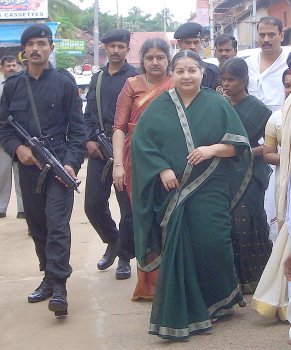
The political protagonists of Tamil Nadu never cease to surprise their voters with their histrionics. And the people too, have never failed to surprise their leaders with their pattern of voting. The pendulum of public support in Tamil Nadu has always swung in favour of one of the two major Dravidian parties. Which side the pendulum swings may be a subject of speculation, but that there will be a landslide is a foregone conclusion.
Not this time, though. Somehow, somewhere, everyone – politicians, voters, armchair critics and even my grandmother seem to acknowledge that times have changed. Why even, Karunanidhi, recently made, a veiled reference to accepting a coalition regime to oust the “anti-people jaya regime”. Coalition, until recently, was a bad word for the DMK. And even the voter’s expectations have undergone a transformation. The fruits of economic growth have indeed trickled down (not maybe entirely) to the grassroots and therefore aspirations of the common man have taken a quantum leap. Take a peek at what voters in Krishnagiri want from the next Government: Revival of small-scale units and investments in Industry. Also topping their list of demands is more colleges and an IT park! When was the last time you heard such a wish-list from a rural district in India.
This is a new reality that even Jayalalithaa acknowledges. For the first time in Battle 2006, she has displayed a sense of nervousness. Two of her actions expose her apprehensions – her decision to cancel her campaign in Kerala (the AIADMK, for the first time ever, has ambitiously fielded candidates in Kerala) and spend more time in smaller hamlets in Tamil Nadu. Kerala is irrelevant in the current scheme of things for Jaya and her party. But that she has chosen to campaign in the same areas in Tamil Nadu once again is significant. Secondly, she has responded to Karunanidhi’s offer of “Rice at Rs 2 per kg” with a counter offer of “Rice at Rs 3.50 for 10 kg”. (I still don’t understand the economic rationale of how this is a better deal!) This knee-jerk response is uncharacteristic of Amma. Her decision to get into a game of one-upmanship in poll promises displays a sense of fear that people will buy Karunanidhi’s story. This is reminiscent of what happened in Andhra Pradesh in the 80s when NTR was voted back to power. He started his campaign with a Rs 2 per kg of rice promise. The ruling Congress Party, desperate and clueless in the last lap of the campaign, chose to offer rice at Rs 1.50. This move boomeranged and the party was wiped out from the state for the next decade. Two questions: Are these populist promises in sync with the aspirations of the times? If they are and if they prevail, will Jaya face a similar embarrassment? Let’s wait and watch…
Monday, April 17, 2006
The Art Of The Impossible
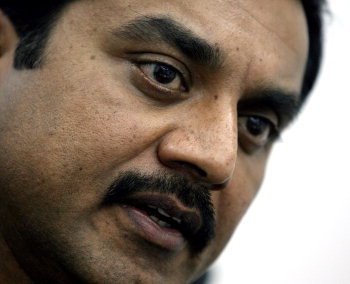
If Vaiko jumping sides was a surprise, eat this: Sarath Kumar, Actor and sitting Member of Parliament from the DMK has decided joined the AIADMK. That's not all, his wife, Radhikaa, who runs, Radaan Media, one of the largest and, arguably the most successful, TV production companies in South India, has thrown in her lot as well. Sarath Kumar's entry in the AIADMK fold is a sure shot in the arm for the electoral prospects of Amma's alliance. Sarath Kumar, is a influential and vocal member of the Nadar community, which was a Congress votebank once upon a time. After Kamaraj, himself a Nadar, the community not seen a leader rise from within. Over the years, the void of a seasoned mass Nadar leader coupled with the arrival of a charismatic Nadar in Sarath Kumar, paved the way for the DMK to snatch this votebank away from the Congress. But, the Nadars, for various reasons, were never too comfortable with the DMK. They were never as cosy with Karunanidhi as, say the Thevars were (and are) with Jayalalithaa. The community's internal divisions - Nadar Hindus and Nadar Christians has only split their political clout along regional and religious considerations.
The real reasons for Sarath's exit are still not clear. The community, one hears, is peeved because very few Nadars have been given tickets in Karunanidhi's DPA. Added to this is Sarath's frustration of being sidelined within the party. Sarath's entry to the AIADMK would mean that the Nadar vote would be in favour of Amma's alliance, atleast the Nadar Hindus. And, Sarath is also an effective campaigner and crowd puller, something that would be useful in - what is turning out a close contest - where every seat seems to count and every vote seems to matter.
Monday, April 3, 2006
Sun Rising & the Rising Sun
Sun TV is going public. The current bull run in the stock markets has attracted the media-shy media mogul, Kalanidhi Maran to raise a few hundred crores to fund his expansion plans. Maran is an ambitious man. Having established a formidable media empire across the four states in South India, he is now spreading his wings to FM Radio and the Tamil newspaper market as well. Whilst his need to fund new businesses is genuine, the key question is - why now?
Sun TV is a Rs 300 crore company with a bottomline of just under Rs 100 crore. That makes him one of the most profitable media enterprises in the country. His success in the in the print media business is still under test. The turnaround of Kungumam, a Tamil weekly mag, ever since Maran actively took control of, is nothing short of spectacular. This magazine has registered the fastest growth in the country, that’s according to the National Readership Survey for 2005. And now, Maran has created a stir in the newspaper market by acquiring and re-launching the venerable Dinakaran, a tamil news daily, by selling it at a cover price of Re 1. And with 41 FM radio licenses under his belt, Maran can be expected to fuel some action in the airwaves as well.
But that’s not half as exciting as the politics behind this public issue. Tamil Nadu is perhaps the only state in the country where ownership of media has always had close links with political establishments. Maran is Karunanidhi's grand nephew. The initial corpus for Sun TV came from the DMK. Even today, the channel is housed at the Anna Arivalayam, the headquarters of the DMK. The success of his network, particularly the on-ground cable distribution owes its growth to the grassroot strength of the DMK. Maran is what he is because of the DMK’s handholding in his early years. Credit him with business acumen, but his political moorings are too close for his own comfort. MDMK’s Vaiko has chosen to focus on Sun TV’s “illegitimate” rise and make it an election issue this time. Jayalalithaa has already formulated a law to take over cable distribution in the State. The bill is awaiting the Governor’s approval.
So if the DMK wins, Maran’s business empire can continue to grow at the scorching pace that it has and perhaps even look beyond the Vindhyas. If it does not, Maran will face the heat from the Jaya-Vaiko combine. And then, he would need a war chest to take them on since the party’s coffers would be empty post-election. To fill that war chest he needs money. Now. That’s why this public issue. The future rise of Sun TV will all depend on the electoral prospects of The Rising Sun.
Sun TV is a Rs 300 crore company with a bottomline of just under Rs 100 crore. That makes him one of the most profitable media enterprises in the country. His success in the in the print media business is still under test. The turnaround of Kungumam, a Tamil weekly mag, ever since Maran actively took control of, is nothing short of spectacular. This magazine has registered the fastest growth in the country, that’s according to the National Readership Survey for 2005. And now, Maran has created a stir in the newspaper market by acquiring and re-launching the venerable Dinakaran, a tamil news daily, by selling it at a cover price of Re 1. And with 41 FM radio licenses under his belt, Maran can be expected to fuel some action in the airwaves as well.
But that’s not half as exciting as the politics behind this public issue. Tamil Nadu is perhaps the only state in the country where ownership of media has always had close links with political establishments. Maran is Karunanidhi's grand nephew. The initial corpus for Sun TV came from the DMK. Even today, the channel is housed at the Anna Arivalayam, the headquarters of the DMK. The success of his network, particularly the on-ground cable distribution owes its growth to the grassroot strength of the DMK. Maran is what he is because of the DMK’s handholding in his early years. Credit him with business acumen, but his political moorings are too close for his own comfort. MDMK’s Vaiko has chosen to focus on Sun TV’s “illegitimate” rise and make it an election issue this time. Jayalalithaa has already formulated a law to take over cable distribution in the State. The bill is awaiting the Governor’s approval.
So if the DMK wins, Maran’s business empire can continue to grow at the scorching pace that it has and perhaps even look beyond the Vindhyas. If it does not, Maran will face the heat from the Jaya-Vaiko combine. And then, he would need a war chest to take them on since the party’s coffers would be empty post-election. To fill that war chest he needs money. Now. That’s why this public issue. The future rise of Sun TV will all depend on the electoral prospects of The Rising Sun.
Monday, March 20, 2006
Billion Dollar Cry Babies
 193000 dollars. 86 lakh rupees. That’s the salary that Gaurav Agarwal will earn in a year from Barclay’s in London. Gaurav is the poster -boy of the fabulous placements – both overseas and domestic - that the IIMs have received this year. And he’s not alone. The IIMs have seen a 40 per cent jump in average and top salaries this year. Now the two young lads – Gaurav and Venkatesh Shankaraman (Take home Rs 30 lakh in India) have written to the Prakash Apte, Director, IIM B asking him not to disclose salary figures of IIM grads in future. They argue that top dollar salaries when reported in the media “…tend to catch the attention of unscrupulous elements and could cause immense physical as well as psychological distress for the persons involved.” They contend that salary figures are “personal” and therefore should be kept “confidential”. In response to this ostensibly earnest appeal, Prof Apte has responded saying henceforth there will be no media announcements of B-school salaries, at least with reference to IIM Bangalore. This development exposes both the naiveté of the students and the knee-jerk response of the IIM establishment.
The Indian Institutes of Management were set up by an act of Parliament. When the erstwhile NDA government tried to tinker with the fee structure of India’s leading business schools, the IIMs, cried foul that their autonomy was being compromised. A large section of the media, the business press, in particular, sided with them. Here was an Indian institution that attracts global talent and that has earned international repute and whose students are sought after every year by companies across the world. To let the government meddle with an institution of excellence seemed blasphemous. “Leave them alone,” said the media.
But now the IIMs have the tables turned on them. An institution set up by Government support and subsidy now seeks to rubbish the idea of transparency. Somewhere, these B-school babies seem embarrassed by their own success. They offer a naïve argument that “unscrupulous elements” will come knocking on their doors. Yeah right! the chota Shakeels and Abu Salems regularly scan the b-school placement list to hone in the next target. For starters, most top dollar employers at B-schools are listed entities; therefore, public disclosure of information about their recruitment plans is mandatory. Even if they are not, do spare a thought for those millions of b-school aspirants. When starting salaries are the yardstick for b-school ratings, it becomes the duty of the media to offer credible information regarding salaries, job offers and so on. Denying this information defeats the spirit of competition - the core spirit of the IIMs.
Rewind to 2001. The economy was not as robust as it is now. You had cases of top notch investments banks and tech companies withdrawing both placement and pre-placement offers. The students then, sought the help of the media, to argue that companies had violated all ethical norms by going back on their word. If the IIMs needed the media to campaign in their favour then, should they withhold information to serve the purpose of a few now? This selective disclosure clearly does not work. The IIMs clearly need better media management skills than they possess currently.
Thursday, March 16, 2006
Case for CAS
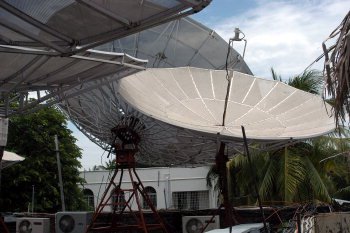
CAS is back! The Delhi High Court says Conditional Access System should be implemented in the three metros in four weeks. This means, if you are living in Delhi, Mumbai or Kolkata, you would need a set-top box to view pay television channels from April 1. In Sept 2004, when CAS was introduced, Chennai was the only city in India then that complied with this regime. The other State Govts protested and refused conditional access for television viewing in their cities.
While the pros and cons of CAS, as a concept, has been debated to death, the HC order now brings the issue of implementation sharply into focus. A few pertinent questions - Will CAS get entangled in a legal mess yet again? Will broadcasters (like Star did last time) throw a spanner in the works? Most MSOs/last-mile cable operators, that I spoke to in Mumbai, cite the Chennai example as a model for emulating. However, the fundamental difference between Chennai and the rest of India, in terms of television viewing, is that popular mass entertainment channels are Free-To-Air… therefore, CAS was easier to enforce. This is not the case in the rest of the country. So will there be consumer resistance to CAS? Are MSOs/Last Mile Operators ready for a rollout in a month? This would mean sourcing STBs, offering reasonably priced schemes for rental/schemes for STBs etc. And who regulates implementation? The Telecom Regulatory Authority of India is toothless body without executive powers and unless the respective State Govts are willing to play ball, there is a hurdle there as well. Net net - a system that is designed to give the consumer the right to choose – once again runs the risk of becoming a casualty of vested interests and flawed implementation.
Wednesday, March 8, 2006
Varanasi and thereafter…
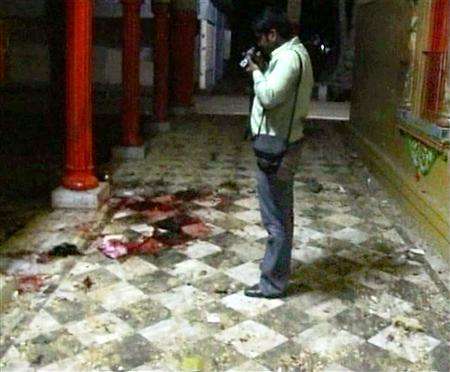 So here’s another bomb blast. Yet another case of ‘intelligence failure’. And as always, the Govt does its well-rehearsed charade of huddling into an emergency meeting after the incident, promises ‘immediate’ action to nab the culprits. Somehow, true to script, the next morning it guns down a ‘suspect’ on the outskirts of Delhi. He obviously has to have a Muslim name and ofcourse, his curriculum vitae has to boast of impressive brands. Interned at Jaish-e-Mohammed, headed Harkat-ul-ansar, militancy experience in J&K, has links to the dreaded Lashkar-e-Taiba. For all you know the bloke must have been roaming freely in Dhaula Kuan until yesterday, when the Delhi Police decided to use him for some target practice. Now why is that every militant who is shot dead/arrested has three or more aliases. And the cops do not even credit these terrorists with creativity in naming. Taste this: “We have apprehended a dreaded terrorist named Mohammed Yusuf alias Yusuf Mohammed alias Mohammed alias Professor Yusuf". And in the world of terrorist brands, the Lashkar is the undisputed number one. Even when in doubt, the India security agencies don’t seem to blink an eyelid before they point fingers at the LeT.
On a serious note, the attack in Varanasi brings the communal issue into sharp focus. Firstly, the blast will be viewed as an attack on the Hindu’s religious nerve center of Varanasi. That too, an attack on a Hanuman Temple – the monkey god who stands for strength, valour and courage. And that too, an attack during Aarthi time on a Tuesday. These facts are fodder enough for the Hindu right wing to rear its ugly head yet again. The scary consequence of this incident is that it brings communal tensions back in the reckoning. That’s exactly what the VHP and its ilk wanted. Didn't they?
Saturday, March 4, 2006
Vaiko steals a march…finally

Cracks have appeared in the Democratic Progressive Alliance, the umbrella coalition cobbled together by Karunanidhi, to oust the Jayalalithaa regime. Vaiko’s Marumalarchi Dravida Munnetra Kazhagam (MDMK) has switched sides yet again. Vaiko has been offered 35 seats by the ruling AIADMK for the May 8 polls to the Tamil Nadu Assembly. The immediate effect of the move means that Karunanidhi’s dream of repeating the DPA’s Lok Sabha victory in the assembly polls stands shattered. But the electoral ramification of the Karunanidhi-Vaiko split this time is far-reaching.
This is the second time that Vaiko has parted ways with Karunanidhi. In fact, the MDMK was born because of Vaiko’s first revolt. In the late ‘90s, Vaiko was the rising star in the DMK. His political acumen, fiery speeches and his aggressive stance on the Eelam issue earned him a berth in Karunanidhi’s inner circle. While political spindoctors were hailing Vaiko as DMK’s next leader, Kalaignar was hatching other plans. Stalin, his second son, was being groomed as the heir apparent of the political leadership of the party. Stalin’s promotion within the party was in direct conflict with Vaiko’s political aspirations. Therefore, when Vaiko revolted, quit and set up MDMK – it was perceived as a battle between dynastic politics and democracy. The MDMK’s stellar success in its first ever elections was testimony to the fact that the people of Tamil Nadu stood by Vaiko. They saw in him a man who had the ability to carve a distinct identity within the Dravidian fold. They saw in him a politician who had the gall to stand up against his mentor Karunanidhi. For he claimed he was wronged and the people believed him so. But those were different times.
With assembly elections less than two months away, Vaiko faces two major challenges. He needs to convince his electorate on two counts – why this revolt against Karunanidhi? And why join hands with Jayalalithaa?
Particularly, the logic behind this revolt has to be hardsold by Vaiko to his votebank. Here are a few facts that stack up against him. In 2003, when Vaiko was languishing in prison on charges of POTA slapped on him by Jayalalithaa, it was Karunanidhi who came to his rescue. It was Karunanidhi who bargained hard with the then NDA government to get Vaiko released from prison.If it not for Karunanidhi’s insistence on revoking POTA, Vaiko would still have been cooling his heels at Vellore jail. Although POTA was not repealed in its entirety even then, if not for Karunanidhi throwing his political weight on this issue, Vaiko would not even have got bail. Vaiko release from prison and his public “vow” to ally with the DMK are still afresh in public memory. Therefore, the Karunanidhi-Vaiko fallout, this time will be viewed as a sishya betraying his guru. A guru who helped in his moment of crisis. Secondly, it would require more than just political brilliance to convince people as to why he chose to join hands with Amma. It was the same Chief Minister who ordered his arrest under POTA! In fact, Vaiko has been vociferously against the Jayalalithaa regime on several issues.
Whilst the electoral arithmetic (35 seats offered by Anna DMK as against 20 offered by DMK) of seat sharing seems to have been the immediate trigger for Vaiko’s sudden shift in loyalties, the long term prospects of winning seem blurred. Vaiko's position now is akin to Abhimanyu in the Mahabharata. He has taken a bold step to enter the electoral chakravyuha. He has no other choice but to fight. And even if he wins, he needs to win big. Else, he runs the risk of being wiped out as a political force. Either which way, his relationship with his mentor, Karunanidhi and the DMK are over. Atleast for now.
Saturday, January 21, 2006
Fears of a monopoly

These are exciting times for the Indian civil aviation sector. This week, Jet Airways swallowed Air Sahara for 500 million dollars in an all cash deal, giving birth to the largest private sector airline in this country. The combined entity would control over fifty percent of the market and, currently reports over Rs 7000 crore in revenues. That’s not all. The Jet-Sahara combine would control two-thirds of the parking bays, a crucial and most sought after infrastructure requirement for airlines, in both Delhi and Mumbai airports. And there’s more. The combine would control over sixty percent of the traffic between the nation’s political and financial capital every day.
Just after this deal was signed, smaller players in the field started crying hoarse and made feeble noises about a monopolistic situation created by the merger of India’s top two private sector airlines. Their fears are not misplaced for several reasons. For starters, the other airlines in the fray viz Air Deccan, Kingfisher Airlines, Go Air and SpiceJet are way too small in comparison. For argument’s sake, let’s leave Air Deccan out of this discussion, for it’s relatively older, low-cost player and reportedly has a marketing alliance with Jet in place already. That leaves us with the other three – which are still wet behind the ears and yet to make a big dent on the market leader. That’s not to say that they are insignificant. All three – in a short time – have adroitly positioned themselves in a market that is on the threshold of an explosion. Never before, has the Indian traveler had it so good. Sample this – the average cost of a ticket say between Mumbai and Chennai is around Rs 3500. Given the plethora of fare options - full fare, check fare, discount fares or what have you; the consumer is undeniably enjoying the benefits of competition.
Would this deal create a monopoly?
The law of the land does not term this deal illegal. It does not even call it monopolistic. In fact, monopoly laws in India particularly in the aviation sector are blurred primarily because this is the first instance when the private sector is playing such a dominant role in this industry.
Monopoly, as economics 101 defines, is a situation when there is a single seller, in a given industry. Monopoly, as a concept, is not evil. It is an ideal that every company fantasizes about but competition – the life-blood of free market enterprise – ensures that a monopolistic situation does not arise. There are many companies in several industries that enjoy not just leadership - but a dominant position in the marketplace. For instance, HLL is a dominant player in the FMCG business, whose rivals are much smaller and possess lesser clout in influencing forces that define success in the marketplace. So, dominance, unlike monopoly, is a tangible goal that every company aspires to achieve. What the Jet-Sahara combine has achieved in the aviation sector is market dominance. Now the questions that need to be asked are these: Were the methods used to achieve this status of dominance against the law of the land – both in letter and spirit? Will this deal place the Jet-Sahara combine in a position that will deprive the consumer’s right to choose – both in terms of pricing and quality of service – as against enhancing it?
Road to market dominance
A company’s leadership in market is measured on a quantitative parameter of sales. In rare cases, it may ascend to a position of dominance by virtue of a revolutionary idea - developing an innovative product and, thereby creating a new market for itself. Sony’s Walkman or Apple’s I-Pod are cases in point. These are pioneers whose dominance lasts as long as a me-too product does not arrive in the marketplace.
But there may be a few situations, which require Govt regulation. A dominant player may use unscrupulous methods to influence Government policy to restrict new entrants in the market. Here, the market leader can control pricing and quality of service, which may be detrimental to the consumer. He may also control access to resources – physical infrastructure or manpower. Price them exorbitantly, pushing it beyond the means of competition. This too, deserves regulation.
In the Jet-Sahara deal, the methods adopted to achieve a status of dominance are clearly above board. Jet, a listed company, has played by the book and has been transparent in the process of acquisition. Sahara, despite its dubious pedigree, has snapped a pretty package, way higher than what analysts had predicted.
So, if this acquisition and its process are legal, are the fears unfounded?
Clearly, Jet will resort to business tactics to get returns that justify its huge investment.
But since access to resources is such a crucial aspect of this business, it is imperative of the Government to ensure a level playing field. The aviation business is unique. The Government creates the physical resources that private players pay and use. These may be parking bays, booking counters, license for routes etc. Unlike, say the FMCG business, if HLL’s dominates the distribution network, a worthy competitor or a bunch of them can create a parallel infrastructure. In the case of aviation, that may not be possible . So, if one player controls a significant portion of that infrastructure and capacity addition is not in the hands of market participants, then it creates a skewed market. Therefore, the Jet-Sahara combine may not create a monopolistic situation, but viewed in the context of the Govt being both a competitor and controller of infrastructure, it does creates a bias – particularly for private sector players. In the long term, this may offer an opportunity to the Jet-Sahara combine, to influence pricing or quality of service that may serve its interests or not the consumer. It is this long-term consumer interest that needs to be protected. And, that’s why the Government needs to intervene.
Saturday, January 14, 2006
Run up to a political tsunami

2006 assembly elections promises to be the tipping point in Tamil Nadu politics for many contenders and for many reasons. If the sabre rattling, in the run up to the polls, is any proof to go by, it is clear that battle lines have been drawn between the two leading alliances. The DMK-led Democratic Progressive Alliance – the umbrella coalition of opposition parties in the State minus the BJP continues to stay united despite rumours of rumble in the ranks. Jayalalithaa, on the other hand, is still playing her political cards close to her chest. But the gameplan that was drawn by the DPA alliance to oust the Jaya regime, way before the Lok Sabha elections 2004, has been dramatically altered. Let’s look a few reasons why.
Rewind to 2004. Jayalalithaa’s image heightened after she came clean from the charges of corruption that were the very reasons for her humiliating defeat in the previous assembly elections. The High Court clearing her in the infamous TANSI land case was a shot in the arm for the rank and file of the Anna DMK. With renewed vigour, Amma’s popularity reached at an all time high. And here’s when things turned horribly wrong. Three separate events – the Govt employees strike for a pay hike was dealt with an iron hand by the State. In one stroke of political high handedness, Jayalalithaa, passed an ordinance modifying Tamil Nadu Essential Services Maintenance Act (TESMA). Overnight, over 2 lakh Govt employees were sacked. A few months earlier, a similar treatment was meted out to a genuine student uprising. Medical college students across the state protested the mushrooming of private medical colleges. The Director of Medical Education suspended 5000 students across the State – crushing their attempt at a democratic means of dialogue with the Govt. Then came Jaya’s piece de resistance. The Tamil Nadu Legislative Assembly convened an emergency meeting on the last day of the winter session to order the arrest of journalists of The Hindu – for what it claimed “malicious and defamatory reportage against their beloved Amma”. While the Central Govt intervened to broker peace between the editors of the newspaper and the Govt, the death knell for Jayalalithaa had been rung. These ostensibly unconnected events revealed the brute force and the audacity with which the State Government chose to clamp down any form of opposition to its policies. But then, this aggression was short-lived. Jayalalithaa’s power drunk glory came crashing to the ground with the humiliating defeat that the AIADMK front faced in the Lok Sabha elections. Of the 40 Parliament seats (including Pondicherry) – the DMK-led combine swept all the 40 seats. This victory signalled two things: One, the people of Tamil Nadu were clearly miffed with the present regime and had shifted loyalties. Secondly, a point psephologists had predicted, that the combined electoral arithmetic of the DPA coalition had routed the AIADMK’s electoral prospects.
From this defeat, rose another Jayalalithaa. This Jaya would take no more non-populist decisions. She would no more order midnights arrests nor would she direct suspension. Instead, she became the epitome of generosity, re-created the image that of a benevolent mother that was once her political passport. All controversial legislations – TESMA, Forcible religious conversions act, power tariff hike, bus fare hike were revoked overnight. This new-found image of Amma was further bolstered by a remarkable achievement by the Special Task Force in killing Sandalwood smuggler, Veerapan. Although, Veerapan’s death did not garner political mileage, it certainly did wonders to the image of her Government. The characteristic intransigence of the Jayalalithaa regime suddenly was supplanted by transparency and dialogue. This, suddenly, was a Government that took action, that produced results. Or it seemed.
It was during this time, the grand old man of Tamil Nadu politics, was cleverly dotting the i’s of his gameplan. Everything had worked perfectly for Karunanidhi. He quit the NDA and joined the Cong led coalition at the right time, usurped the role of the king maker with finesse, cobbled up a coalition in the State and led it from the front to victory, and installed his grand-nephew and ten others in the Union cabinet. But nature had other plans.
In December 2004, a tsunami, a word that would soon be added to common parlance in India, left a trail of death and devastation in Tamil Nadu. The damage was unprecedented. The rebuilding efforts required the Government to rise above petty political concerns. And that the Jayalalithaa regime did well - to its credit. Even the World Bank has acknowledged that the remarkable repair and relief work carried out by the State Govt. This natural disaster was not factored in Karunanidhi’s political gameplan. Worse, still, the state had more tragedy in the offing. The torrential rains in 2005, caused more death and destruction. Despite the best of efforts, the State Govt’s handling of rehabilitation came in for criticism. Particularly, the stampedes at relief camps were just unpardonable. But were they blips or was it a failure of administrative machinery? Facts would point to the former but the DMK would vouch for the latter. Unquestionably, the healing touch of the State Government has erased the follies of its past from the minds of the people. Karunanidhi understands this better than anyone else. Therefore, he is now re-drafting his plan to take of the challenges of the new reality. As of Jan 2006, the DMK-led coalition has begun issuing the war cry. While Amma is quietly working on building her campaign on her recent achievements. Will the DPA last or will Jaya manage to break it? Will Amma go with the BJP or will she go it alone? These answers will unfold in a few months. Clearly, this is a political tsunami that is waiting to lash the State of Tamil Nadu.
Tuesday, November 29, 2005
The etymology of maa-behan ki gaali
"Bain-chod, tand bahut jyaada hai," exclaimed a pan-chewing haryanvi jat standing next to me at an STD booth in M-block market. Before, I could react, the STD booth walla wearing a silly pink monkey cap replied, " Main thon,bainchod, kulfi ho gaya". With the belief that Indian society had not yet become so liberal, I deduced that these two armchair meterologists were not the incestous type. But "bainchod" is swear word. Now, why were they swearing at each other over the weather? I thought.Later I realised that the term 'bainchod' was a sweet Delhi way of starting a conversation with strangers. In the next fortnight, I realised alluding to fornication with your mother (or your sister, if you like) in hindi was next best thing to a cigarette. It was tool to enter a conversation with a complete stranger and within minutes you could be on 'bainchod' back-slapping terms with him. It is in the process of understanding the etymology of the b-word, did Delhi teach me a thing or two about life. It was a long, cold January that I set foot in Delhi. My parrys-corner sweater refused to protect me from the cold blast that welcomed me to the nation's capital. "Super sweater saar," I remember the oily malayalee salesman saying to me at Junus Sait, Chennai's one-stop woolen retailer. It turned out that the sweater for which I had paid a fortune was no better than a tantex banian for Delhi's winter. So I decided to seek professional help from my Kashmiri room mate who took pity on me and introduced me to the world of woolen inner-wear (not underwear). "You better wear this or you'd be dead, by the end of the week," he explained bluntly.Until then, winter was just a concept to me. In my good old Madras, there were (and still are) only three seasons - hot, hotter and hottest. Well, I had read about snow and winter in fairytales and books. Cold, in the context of weather was.. Ooty or Kodi where I went almost every other summer. "So, I can manage it," I thought. I was never so horribly wrong ever in my life. So there I was - a sun-bathed-by-birth-tam-brahm - forced to wear a woolen inner wear, three sweaters, a grey monkey cap and drinking a cup of Chai! Mind you, this wasn't even the Nair version. I was in Delhi to attend a training programme. I had, by a sudden turn of events, found a job as a hindi reporter for a mainstream hindi news channel - reporting in the rashtra bhasha. My overnight professional transformation was followed by a linguistic rebirth. "Well your hindi is fine...you just need to start thinking in Hindi now," began my trainer. What happened thereafter will be saved for another blog sometime.How I fell in love with Delhi and its abuses is the subject at hand. So here I was in Delhi attending a training session along with 30 seasoned reporters from all over the country. Every morning, a Toyota Qualis collected 10 of us from Rockland Inn in CR Park where we stayed (Delhi is full of these shady 'inns') and dropped us at The Park where we had to undergo these torturous 9-hour long training sessions. Since, there were thirty of us, the Qualis had to make three-trips. It was in all fairness, first-come-first-to-get-a-seat arrangement. The same routine was followed in the evening as well. On the ride back, we all jointly indulged in 'reflecting our views' on the day-long training session. In short, these were delicious bitching sessions. Some cirbbed about how bad the lunch was, some complained about how terrible the training was and how awful the trainers were and so on. And in each one of these complaints, I was privy to some exquisite hindi punctuated by some top-class maa-behan ki gaali. Now, I had less than a month to prove to my employers that I could not just communicate in Hindi, but I was darn comfortable at it as well. I must admit that consistent exposure to gaali-vocabulary did wonders to my confidence.Jayantda, a senior reporter, often mixed his Queen's English with chaste hindi with sprinkled with a strong Bengali twang. Now our man had learnt his first lessons in reporting in Delhi and it was quite evident with the way he swore. His enunciation was perfect. Sample this, "These trainers worth a tuppence, have the gall to tell me that I think like some bainchod some cub reporter." Note the typical victorian english and the right delhite placement of the b-word.Jha, a Bihari who married a rich zamindar's daughter in Orissa, had a typical Bihari isshttyle of speech. His bainchod were more guttoral. He would also stress more on the "bain" than the "chod". I am no expert in linguistics. My knowledge of the subject is limited to just one year of studying it in college.But, frankly, I strongly believe that it is possible to place a man - his social standing, his origin by the way he swears. Swearing is not a mere expression of frustration or anger. The choice of abuse reveals a lot about one's personality. For instance, when we use the four-letter word, many avoid using maternal associations. The thought seems rather ungentlemanly even when you are swearing at someone. I know of a friend, who would even when provoked to the hilt, would not say more than a "damn" or "darn" or "oh bother". Thus, revealing a very refined upbringing where swearing was strictly forbidden by powers that be - family, teachers or mentors. ((more to come))
Subscribe to:
Posts (Atom)