Earlier this weeek, I was talking to a few experts on Risk Management and how companies need to make risk management practices a part of their daily operations. Ravi Narain, the head of the National Stock Exchange told me that taking risks may be a necessary part of growth but that does not mean that one should not have a contigency plan in place, just in case things go wrong. But he believes that risk and growth are not in conflict with each other.
Somehow that thought stuck in my head.
Now through the week, I have been reading and analysing the drought situation that seems to be worsening. As I write, 264 districts in India have been declared as drought affected. That's nearly half the country that we are talking about. Yesterday, the finance Minister says there is a need for a contingency plan to be put in place.
This is what I dont get.
So the Govt wants to put in place a plan after the crisis has happened. Much the same way, Mmbai spoke about the need for crisis management team after the terror attacks
Why is it when things are all hunky dory, no one speaks of the potential risks? When the country was growing at 8 per cent clip, not once did we speak about potential pitfalls. My question is
Why doesnt the Govt of India have its risk management practice in place?
Saturday, August 22, 2009


Wednesday, July 15, 2009
Business News Channel Viewership - The Verdict
The latest viewership data from TAM reveals that on Budget day, CNBC TV18 was the most watched English news channel in India. Slice through the numbers across categories (age groups or time bands) and you will find that the dominance of CNBC TV18 is undisputed. Don't get me wrong, I am not writing this to thump my chest screaming victory or snigger with arrogance. Not at all.
I am not a big believer in the ratings game, largely because I do not think the existing method of measuring viewership is comprehensive or foolproof. For instance, the existing method does not capture viewership at offices at all (called Out-of-home audience). If you include this chunk, I believe, CNBCTV18's numbers would be much bigger than what it is now. But that's not the point.
What I want to talk about is the crisis of imagination that the industry is suffering from.
In the past four years, there have been three new players who have entered this market. All promising something new and something exciting. But they have ended up doing exactly the same as the market leader. And these viewership numbers, even if they are for one day, prove that their fare has not been accepted by viewer, for whatever reason. And here's the worst part (or the good part, depending on how you see it) - there is no one wanting to find out that reason. No one, including us, really knows what "works" on air. What is it that the viewer wants to see? In most news channels, content strategy is often defined by collective and subjective editorial opinions (read gut feel) and not at all backed by data. Compare this to say the FMCG industry, does an ITC launch a product without knowing what the consumer wants? Will HUL experiment with a variant of Surf without adequate qualitative research? If news channels were products, (I hate this comparison, though that's the reality of the marketplace) why does the consumer not feature in the equation at all?
To me, it is important for CNBCTV18 to retain its dominance but it is equally important to see that the playing field grows bigger. And that growth in the market will happen only if the industry attempts to know, understand, reach-out and serve the customer better. But, for now, I have no reason to complain, cos I am on the winning team!
Saturday, April 4, 2009
Let The Games Begin!

After a long gap, I am back to writing about Dravidian politics! Much has changed in the last one year in the political landscape of Tamil Nadu, however, the basic premise that the political pendulum will swing one way or the other still remains. So say observers. But will it...really?

Here's what is at stake
40 seats. Tamil Nadu will send 39 members to the 15th Lok Sabha. Add one more from Pondicherry. As has been in the past two elections, the DMK or the AIADMK led coalition is expected to swing the popular vote its way entirely. In 2004, the DMK Supermo Muthuvel Karunanidhi engineered a rainbow coalition of 15 parties and knocked-out the Jaya-BJP combine 40-0. The control over these 40 seats gave Karunanidhi the clout to get whatever he wanted from the UPA Government. For starters, he got all the ministries he wanted. He got ministers changed - A.Raja took Dayanidhi's place as IT & Telecom Minister, when the latter fell out of favour with the DMK leadership. He almost got the Sethusamudram Project cleared - with a very vocal TR Balu fighting in Parliament. Had it not been for the Govt's lawyers mucking up in Supreme Court even that would have been reality.
Bone of Contention - The Tamil EalemIssue
What has become a political rallying point is the UPA's handling of the Tamil Ealam issue. Karunanidhi has been pushing for greater intervention by the Govt of India in the battle between the LTTE and Sri Lanka, and rescue the Tamils caught in the crossfire. While Pranab Mukherjee visited Colombo at Karunanidhi's insistence, it was perceived merely as an act of symbolism and did not result in any material outcome. This was enough fodder for the disgruntled elements with the DMK led coalition partners to call it quits. Vaiko, the firebrand leader of the MDMK who has made no bones of his support of the Ealem cause, quit the DMK alliance before the assembly elections in 2006. Now, the eternal cat on the wall, Dr Ramadoss cited Karunanidhi's failure over the Tamil Ealem issue, among several others, as a reason to switch sides. He arrived at a seat sharing deal with Jayalalithaa recently.
Here's how it looks now
So you have the DMK + Congress and a few minor parties such as the Dalit Panthers led by Thol Thirumavalavan on one hand. The AIADMK + PMK + MDMK + Left on the other. Amma notched up a clever alliance with the left parties, who control 1 or 2 seats in the State.
There are two important players left - the BJP and DMDK led by Actor Vijaykanth. BJP is not a strong force in the State, but it is inevitable for one of the State coalitions to ally with NDA at the centre, if it comes close to forming the next government. But the real spoiler in this elections is going to be Vijaykanth and his DMDK. In the last assembly elections, DMDK debuted with a commendable 8 per cent vote share. While Vijaykanth has ruled out allying with both the coalitions, his strategy post the elections may be critical in deciding which electoral alliance from Tamil Nadu will call the shots at the centre.
Monday, March 17, 2008
Does history matter?
Lance Klusener. Caught Sathish. Bowled Vignesh.
To me, this scorecard entry was even more painful than my stomach flu that had forced me to stay home on a weekday and watch the bastardised version of the oneday game. While the game was thoroughly entertaining, what I was upset about was my realisation, that even gods of my past have feet of clay. Lance Klusener, to me and many admirers of South African cricketer, was the god of slog cricket. Zulu, or the African warrior, as he was nicknamed demolished every reputed bowler of that era, particulary during the World Cup.
That World Cup final, which South Africa should have won, was singularly shouldered by the mighty Zulu. With His jayasuriya like forearms, broad shoulders, jaw dropping strokeplay, Zulu was invincible. Despite his swashbuckling style, Zulu, off the field, was an enigma. One hardly got to know of his personality otherwise. But that didnt matter. Zulu was good at what he did. A nimble footed fielder and runner between the wickets and he killed and ravaged bowlers in style.
But today, Lance Klusener was not the Zulu I knew. He looked emaciated. Old. Tired. His bat pathetically swishing across the offstump to miss pedestrian deliveries off an unknown bowler. Then came an apology of a lofted cover drive straight to the point. I wonder if either the fielder or the bowler, or even the pretty looking model turned commentator knew about the Zulu of yore. Did they even bother about the history of this man. Coming to think of it, do history matter anymore? ....more on this
Wednesday, January 23, 2008
This farce called decoupling
In the past few months, there have been several theories floating to justify why the Indian stock markets were defying gravity. Among them was a popular notion called 'decoupling'. Armchair analysts and self annointed experts spewed wisdom to say there is decoupling at work. Don't you worry if the Dow or the Nasdaq were crashing, look at the sensex that's where the real story is, they said. If you bought that theory, you'd believe you are living in paradise, where the economy is unstoppable and sensex could continue defy gravity and we'll are all bound to be billionaires. Nothing wrong with this optimism, it is only the dubious basis of the theory that they were peddling that I had a problem with.
For starts, decoupling assumed that the Indian markets were insulated from the mood swings of the US Markets. They argued that Indian markets had matured enough to chart a course of its own. Some sectors, they said, like IT would be affected in the near term, but the broader markets were high and rocking. And then, they threw the cliche, the India growth story is intact, the Indian economic fundamentals are sound and this was stretched to prove that even if the world's largest economy slowed down, it would have negligible impact on India - its economy and its markets. To add credence to this theory, the markets skyrocketed early this year although the US markets made no headway since Jan 1.
And then came Terrible Tuesday!
This theory fell flat on its face on Terrible Tuesday Jan 22,2008. Global markets crashed hand in hand with the US and the facts were there for everyone to see. The moral of the story was the world has started accepting the reality of a US economic slowdown. The Fed chief testified to the Congress that the economy is slowing but he does not see a recession. That was pure semantics. Few days later, President Bush announced a fiscal revival package and Ben followed that up with an unprecendented emergency rate cut, to stem the slide more so in falling sentiment that in stocks. Now, if global markets were reacting, they were not decoupled were they? If the Indian markets tanked 2000 points, it was very much coupled...wasn't it? I am not trying prove a coupling theory which is equally facile.
Now, let's assume the sensex chooses to flirt with higher levels for a week or so when the US markets is tanking. Does that meaning the "coupling" theory is wrong? The point is this day to day corelation does not work and is not a reliable theory to base one's forecast on.
It's the economy stupid
Macroeconomy 101 and Manmohan Singh post-91 have made us understand how interlinked the Indian economy has become. The retail sales figures of Walmart is causing ripples in Tirupur. Poltical instabilty in Mexico is making Mittal postpones his greenfield investment in India. These are hard facts and this is how economies work. Because economies are run by people, who are, even in their dogged pursuits of profits, are swayed by emotion which define their judgements. To believe that economies are impervious to each other, most of all to the biggest, is being naive. To propound it, is foolhardy.
Saturday, September 15, 2007
Twenty20

I was among those who had given up on cricket after a series of events broke my trust in the honesty of the game. Then, our humiliating first round defeat in the World Cup convinced me that the game had come to an end, atleast for me. But then arrived Twenty20.
India beats Pakistan
And what a match it was last night! A nail-biting India-Pakistan encounter reminiscent of the famous battles between the two countries at Sharjah in the late '80s. And this was even better. In the 20-over a side, three-hour blitzkrieg, the match was clearly not over, as the cliche goes, until the last ball was bowled. 141 was hardly a target to protect, one thought. But as Pakistan struggled to keep its wickets, you sensed victory in sight. But the Pakistani middle order had other plans in mind. With some swashbuckling batting they brought down the asking target to just 12 runs in the last over. Two boundaries and three later, they dashed India's hopes and had to score just 1 run to scream victory off the last ball. Sreesanth ran in to deliver, with hope in his mind and his heart on his sleeve, the batsman found the fielder and the fielder found the stumps. Run-out. Tie. The first ever in a Twenty20 Indo-Pak match. Then began the bowl out. 5 bowlers from each side take turns to hit the unguarded stumps. India cruised through with all its 3 bowlers - Sehwag, Uthappa and Harbhajan bang on target. Pakistan's respected seamers failed to knock the stumps down even once.
So India won. But has cricket lost?
At first glance, I , like many of my friends, cringed at the idea of Twenty20 cricket. Many purists filled up newspaper columns to defend the purity of the gentleman's game being besmirched by a format for street-urchins. But then, this is tailor-made for television. Think about it. When was the last time you sat through an entire one-day match? This is just 3 hours. It's fast paced, exciting and puts purists' arguments of pitch, weather and wind and the typically Brit pre-match commentary irrelevant. So will ODI die? Of course not. Did Test cricket die because of the ODI? Frankly, we have seen some magnificent test matches quite recently in England. Net net, the game of cricket has evolved. The format may take away its gentle charm as we know it, but it infuses a fresh bubbly energy that is too good to resist. Cricket is back. Atleast for me!
(Picture Courtesy: The Hindu)
Monday, May 14, 2007
DMK - Split Wide Open

There is never a dull moment in Dravidian politics and this time cracks have appeared in the Dravida Munnetra Kazhagam. What triggered this political crisis was a seemingly innocuous opinion poll published by Tamil daily Dinakaran, owned by the Maran fold. The poll found that over 70 per cent of Tamil Nadu preferred MK Stalin as the successor to Karunanidhi, while elder brother MK Azhagiri had an embarrassing 2 per cent support. Enraged by the poll, thugs from the Azhagiri camp ransacked and set the Madurai office of Dinakaran on fire killing three innocent employees. In a swift turn of events, Karunanidhi summoned over a 100 party functionaries for an emergency meeting and decided to strip Dayanidhi off his ministerial badge. Even before the show cause notice reached him, Dayanidhi faxed his resignation to the PMO, phoned Manmohan and Sonia and hurriedly called a press conference to declare his allegiance to his "Thailavar Kalaignar" (Leader Karunanidhi). "I am born DMK man and I will die a DMK man, " he thundered.
Dayanidhi's meteoric rise
Dayanidhi meteoric rise raised many eyebrows within the party and outside but no one dared to question his position. After all, he was part of the family and the inner coterie of Kalaignar. Those who did, like Sharat Kumar, actor and former MP, were thwarted and thrown out. You could not take on the Maran brothers especially when the DMK was in power. Or it seemed.
The real question - Stalin Vs Azhagiri
This is a question that Karunanidhi has warded off for many years. But it is clear that MK Stalin is heir apparent to the throne. Though he does not match his father in terms of charisma, stature or popularity, Stalin is the emperor in waiting. Stalin does not see eye to eye with his elder brother Azhagiri, who has always been the problem child in the family. Azhagiri runs a parallel government in Madurai irrespective of whichever party is in power. Much to Karunanidhi’s chagrin in the past, Azhagiri even engineered the defeat of DMK candidates in the local elections if they were not of his choice. He even has a criminal case against him for the murder of DMK leader T.Kirutinan. So the best Karunanidhi could do was the buy peace with him. Though Azhagiri does not hold a post in the party, all decisions about Madurai has his blessings. For several years, this peace treaty has worked for Karunanidhi. Now that the uncomfortable question that Kalaignar has hitherto kept under wraps is out in the open, will the Azhagiri-Stalin war resume again? Therefore, the fallout of the opinion poll does more damage to Karunanidhi than it does to the Marans or Azhagiri.
Where does it leave the Marans?
For anyone tracking Tamil Nadu politics, this is the missing piece in the puzzle. The Marans had it all going for themselves. Dayanidhi was basking in the glory of bringing investments to Tamil Nadu as the Telecom Minister. Kalanidhi’s media empire was growing at a furious pace. His Sun TV had gone public; he had expanded his grip from television to radio to the print medium. Why, the newspaper in question, Dinakaran, was acquired recently by Kalanidhi. It was relaunched at rock bottom price and was the fastest growing daily in the state. So why would they upset the applecart? There in lies the mystery of this case.
(Picture courtesy: The Hindu)
Saturday, April 7, 2007
Not so special economic zone!

The Govt of India has decided to cap the maximum size of a Special Economic Zone at 5000 hectares. This would mean that larger SEZ projects - such as Reliance's Navi Mumbai project would not be approved. There's more, State Governments can bring down the cap on the maximum size on their whim. This clearly defeats the purpose of SEZs being large standalone islands with state of the art infrastructure. If they are not large, then what's the point? Can't states just be content with IT parks or Industrial townships rebranded as SEZs?
What's so special now about SEZs?
But the real dispute is not about size, It's about land. And, here's the latest - State Governments have been told to stay away from "compulsory" land acquisition. That means, corporates would transact land deals with farmers directly. The Commerce Secretary argues that the process of land acquisition is a "commercial" transaction between a buyer and a seller. Therefore, States will have no role to play in the deal. Let's for a moment buy the Govt's argument that it is just a commercial transaction. If that be the case, why should the Govt bother to cap the size of an SEZ. If there is a willing buyer and a willing seller, why not leave it to them?
Lessons from Nandigram
The Nandigram genocide clearly displayed that land acquisition is anything but commercial. It is not just about finding a right price for a piece of land and ensuring that the cheque reaches the farmer. It is also about rebuilding the farmer's life when he has been uprooted from his home and his industry taken away. And, it is also about generating alternative employment for those hundreds of landless labourers who work on these farm lands on daily wages. Tell me, can the Govt afford to adopt such a hands-off approach and leave it to market forces?
Facts prove that the Bengal Govt bungled on Nandigram. So does this strengthen the case for greater and more effective State intervention or weaken it? Shouldn't it be the responsibilty of the Govt to regulate land acquisition not just in the case of SEZ but also in non-SEZ projects where large scale acquition is involved? Instead of greater regulation and intervention, this Govt has clearly washed its hands off any issue arising out of SEZs. The political backlash of another Nandigram seems too heavy a price to pay for the UPA Government. But wait a minute, wasn't it the same Government that swore about a putting a comprehensive rehabilitation policy in place before approving SEZs?
Tuesday, March 27, 2007
Exclusive!
We journos love the word 'exclusive' in the context of an exclusive story. It gives us a sense of achievement and euphoria of having information that no one else has. But let me talk about 'inclusive'. You know, it's now fashionable to use the word 'inclusive' in the context of inclusive growth and this whole spiel about bridging the divide between haves and have-nots. On Budget Day, Chidambaram sprinkled the i-word generously in his budget speech, my Editor picked it up for his edit, TV discussions repeated it ad nauseum and all the pink papers included 'inclusive growth' in their post-budget op-eds. In fact, recently, I also read an interesting piece titled The All Important Inclusion .... do check it out.
Now having heard/read all that's been said/written about the importance of inclusive growth, I just have one question: On one hand, this Government claims that it wants inclusive growth. Says it is committed to creating equitable distribution of opportunities. On the other hand, it allows Special Economic Zones that are elitist, well-endowed, tax-less, lawless privileged enclaves of excellence.
Tell me, do you really buy this inclusive story?
The Left's Not So Right Anymore!

It made riveting television. An event that left the left red faced. The debate in Parliament was on shifting a Maritime University from Kolkata to Chennai. The left accused the Government of trying to clandestinely shift the university (beats me how one can secretly move a darn college!) and "damaaje the intarest of Waste Bengaul." So, tempers flared, voices raised and before an adjournment could be called, our beloved comrades rushed to the well of the house and almost came to blows with their own allies - MPs from the DMK!
Mind you, this is the same political grouping that traditionally takes a moral high ground on everything including 'parliamentary' behaviour. Much to Somnathda's chagrin, Members of Parliament from the left behaved like hooligans that afternoon. While most left leaders have scant respect for TV etiquette, (except Karat and Yechury, but if you have ever seen D.Raja and Dipankar Mukherjee on air, you'll know what I mean) watching them stoop to fisticuffs was a new low. Gurudas Dasgupta was at a loss of words, and that doesn't happen too often to him especially in front of a TV camera, justifying such lumpen behaviour. I just wish a few punches landed on TR Balu. It would've been grand fun! Wonder how Lok Sabha TV does in the ratings game.
(Picture courtesy: ibnlive.com)
Saturday, March 24, 2007
Wednesday, February 21, 2007
This English Yaar!
“Where are you putting up?” asked this petite acquaintance from Delhi. Putting up what? I almost asked. Ah! she meant to ask where was I staying. Dinner table courtesy restricted me from poking fun at her inadvertent faux pas. Starters arrived but the lady refused to stop. After I told where I was “putting” up, she attacked, “So how is the job ‘opPORtunities’ in Mumbai?” I thought of mentioning that if she wasn’t pretty, my old English professor would have used this ‘opportunity’ to skin her alive.
You know …what’s with these Delhi-ites? They are fashionable, I mean they are great when it comes to dressing up well to shop at M-block but their urge to butcher the Queen’s language is much more than their lust for butter chicken. But hang on, there was more murder that evening.
To be fair, she was a well-educated, confident, young woman, an expert in retail banking but had scant respect for pronunciation. “So what do you ‘hair’ in Mumbai? (Read - ’here’) . If she said that in Tamil, she’d be jailed for unparliamentary language. (Tamil abuses and their English skills can be saved for another blog). So, I said, I am splitting hairs over my job ‘here’ in Mumbai.
At main course, it was homicide. “I have to return back to Dhelli imme-jiately. I am taking today evening flight.” The city, my love, is called Delhi with a hard D. Don’t even get me started on “immediately” – that word has been a victim of national torture.
After all this, I was in no mood for dessert. And as we tipped the waiter, came her piece de resistance, “Give me your ‘cuntact.”
My case rests.
Friday, May 12, 2006
Sun rises on Fort St George
82-year old Muthuvel Karunanidhi is set to become the Chief Minister of Tamil Nadu once again. He will be anointed for the fifth time as the head of the State, but for the first time ever in the history of Tamil Nadu politics, the DMK will lead a minority government, supported by the Congress, the PMK and the left parties. It has been a decisive victory for the DMK-led Democratic Progressive Alliance that has romped home with 162 seats, leaving Amma way behind with 70 seats.
Lessons learnt
But what’s more interesting are the many twists and turns that we have seen in Elections 2006. In the run-up to the polls, the DPA hoped to repeat the spectacular success that it tasted during Lok Sabha 2004, when it knocked the AIADMK, 40 to none. But it received its first jolt when Vaiko’s MDMK walked out of the alliance and joined hands with Amma. The elections results this time, however, have cut Vaiko down to size. His MDMK has managed to win only 7 seats proving that he is still only a fringe player in Tamil Nadu. Thol Thriumavalavan also has some soul searching to do. His Dalit Panthers have hardly made an impact on the electorate, winning just two seats despite its presence in the State for the past one decade. Even Dr Ramadoss needs to introspect on his party’s performance. Hitherto, he has been cleverly jumping onto winning alliances, but somewhere, his grip on the Vanniar community seems to slip and the need to reach out to larger votebase seems imminent.
Captain Vijaykanth
The big story of victory is that of actor Vijaykanth and his DMDK. Although he has managed to win only one seat (Vridachalam where he contested), the party has made a huge dent on the winning margins across the State. DMDK has made significant inroads in North Tamil Nadu, PMK’s bastion and more importantly, it has eaten into vote shares of parties across the board. For instance, K Anbazhagan, treasurer of the DMK, won his homeground Harbour constituency by an embarrassing 400-odd votes. A DMDK candidate managed to eat into both the DMK’s and the ADMK’s share. In all, an 8.33% voteshare across the State for a first timer is truly commendable.
Moral of the story
Much has been said about the “arithmetic versus chemistry” that titled the voter in favour of one alliance. Also, there has been considerable analysis of the populist promises of rice and colour TVs that both Karunanidhi and Jaya offered. But for me, it’s not the rice, the colour TV or the poll alliance that ticked. The big winner, for me, was clearly the voter of Tamil Nadu. The state had a 70% voter turnout – a clear affirmation of the belief in democracy and in the process of adult franchise. Amma’s ouster is also a loud announcement that people prefer change irrespective of performance of the Government. Change, it seems, is a constant need among the electorate of Tamil Nadu.
Wednesday, May 3, 2006
Pramod Mahajan - Triumph of Spirit

As I write this, Pramod Mahajan is fighting his last battle for survival at the Hinduja Hospital in Mumbai. The story of Pramod Mahajan, to me, is a tale of confidence, self-belief and perseverance in the dirty world of politics. I recall it was in the early 1990s that I first heard about Mahajan from a classmate, who himself was a staunch VHP supporter. He told me how Pramod was a swayamsevak and a rising star in the BJP. A few days later, I read an article on the BJP-RSS adroitly written by Swapan Dasgupta in India Today. Then sometime, later, I saw him on Star News (the earlier NDTV avatar). Pramod Mahajan came across as a confident, articulate and moderate voice of the BJP. He handled the discussion with élan, bounced off criticism with seasoned repartee and managed to win the confidence of both the audience in the studio who responded to his remarks with thunderous applause and millions of middle-class viewers across the country. Mahajan was the middle-class hook of the BJP. His suave, polished countenance coupled with his Hindutva belief was the right recipe to serve the middle-classes during those times. Mind you, I am talking of a period after Babri and before Godhra, when there was unabashed support for Hindutva politics and growing anticipation of the BJP as the Government-in-waiting. Mahajan ascendance can be attributed to being the right man in the right party and at the right time. He embraced modern world thinking, networked with corporate India and was often troubleshooter for the party. But Pramod Mahajan was no saint. He had his fair share of controversies – accusations of corruption, scandal and murder.
The next decade saw Mahajan grow in stature and occupy an enviable position of a master strategist for BJP’s election campaigns. Mahajan was made Defence Minister in Vajpayee’s 13-day Government. He later held the IT, Telecom, Parliamentary Affairs portfolios. But Mahajan’s fall from the power zone was as quick as his rise. He was believed to be the key architect of the India Shining campaign that bombed during the Lok Sabha Elections 2004. Mahajan, unlike other politicians, accepted defeat and took responsibility for it. I still remember in a TV interview, he candidly admitted, “If I’d won, I’d been made a hero, now that we have lost, I take responsibility and look at future challenges.” This was quintessential Mahajan. An eternal optimist and a fighter. For someone, who came from a village called Ambejogai in Maharashtra, it is this die-hard spirit that came to his aid in his moment of crisis. It’s only a matter of time before we hear the worst from the Hinduja Hospital. But Pramod Mahajan will always be remembered as a man – who was candid about his views, someone who fought hard, and never failed to his accept his mistakes. A rare quality in a politician.
Wednesday, April 19, 2006
Rice Politics and a nervous Amma
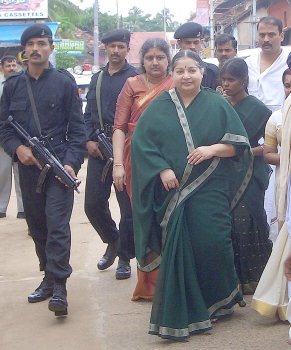
The political protagonists of Tamil Nadu never cease to surprise their voters with their histrionics. And the people too, have never failed to surprise their leaders with their pattern of voting. The pendulum of public support in Tamil Nadu has always swung in favour of one of the two major Dravidian parties. Which side the pendulum swings may be a subject of speculation, but that there will be a landslide is a foregone conclusion.
Not this time, though. Somehow, somewhere, everyone – politicians, voters, armchair critics and even my grandmother seem to acknowledge that times have changed. Why even, Karunanidhi, recently made, a veiled reference to accepting a coalition regime to oust the “anti-people jaya regime”. Coalition, until recently, was a bad word for the DMK. And even the voter’s expectations have undergone a transformation. The fruits of economic growth have indeed trickled down (not maybe entirely) to the grassroots and therefore aspirations of the common man have taken a quantum leap. Take a peek at what voters in Krishnagiri want from the next Government: Revival of small-scale units and investments in Industry. Also topping their list of demands is more colleges and an IT park! When was the last time you heard such a wish-list from a rural district in India.
This is a new reality that even Jayalalithaa acknowledges. For the first time in Battle 2006, she has displayed a sense of nervousness. Two of her actions expose her apprehensions – her decision to cancel her campaign in Kerala (the AIADMK, for the first time ever, has ambitiously fielded candidates in Kerala) and spend more time in smaller hamlets in Tamil Nadu. Kerala is irrelevant in the current scheme of things for Jaya and her party. But that she has chosen to campaign in the same areas in Tamil Nadu once again is significant. Secondly, she has responded to Karunanidhi’s offer of “Rice at Rs 2 per kg” with a counter offer of “Rice at Rs 3.50 for 10 kg”. (I still don’t understand the economic rationale of how this is a better deal!) This knee-jerk response is uncharacteristic of Amma. Her decision to get into a game of one-upmanship in poll promises displays a sense of fear that people will buy Karunanidhi’s story. This is reminiscent of what happened in Andhra Pradesh in the 80s when NTR was voted back to power. He started his campaign with a Rs 2 per kg of rice promise. The ruling Congress Party, desperate and clueless in the last lap of the campaign, chose to offer rice at Rs 1.50. This move boomeranged and the party was wiped out from the state for the next decade. Two questions: Are these populist promises in sync with the aspirations of the times? If they are and if they prevail, will Jaya face a similar embarrassment? Let’s wait and watch…
Monday, April 17, 2006
The Art Of The Impossible
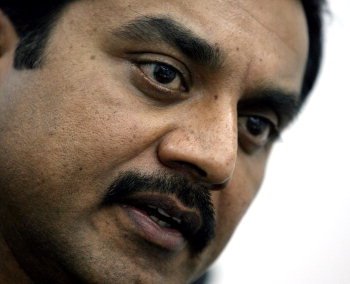
If Vaiko jumping sides was a surprise, eat this: Sarath Kumar, Actor and sitting Member of Parliament from the DMK has decided joined the AIADMK. That's not all, his wife, Radhikaa, who runs, Radaan Media, one of the largest and, arguably the most successful, TV production companies in South India, has thrown in her lot as well. Sarath Kumar's entry in the AIADMK fold is a sure shot in the arm for the electoral prospects of Amma's alliance. Sarath Kumar, is a influential and vocal member of the Nadar community, which was a Congress votebank once upon a time. After Kamaraj, himself a Nadar, the community not seen a leader rise from within. Over the years, the void of a seasoned mass Nadar leader coupled with the arrival of a charismatic Nadar in Sarath Kumar, paved the way for the DMK to snatch this votebank away from the Congress. But, the Nadars, for various reasons, were never too comfortable with the DMK. They were never as cosy with Karunanidhi as, say the Thevars were (and are) with Jayalalithaa. The community's internal divisions - Nadar Hindus and Nadar Christians has only split their political clout along regional and religious considerations.
The real reasons for Sarath's exit are still not clear. The community, one hears, is peeved because very few Nadars have been given tickets in Karunanidhi's DPA. Added to this is Sarath's frustration of being sidelined within the party. Sarath's entry to the AIADMK would mean that the Nadar vote would be in favour of Amma's alliance, atleast the Nadar Hindus. And, Sarath is also an effective campaigner and crowd puller, something that would be useful in - what is turning out a close contest - where every seat seems to count and every vote seems to matter.
Monday, April 3, 2006
Sun Rising & the Rising Sun
Sun TV is going public. The current bull run in the stock markets has attracted the media-shy media mogul, Kalanidhi Maran to raise a few hundred crores to fund his expansion plans. Maran is an ambitious man. Having established a formidable media empire across the four states in South India, he is now spreading his wings to FM Radio and the Tamil newspaper market as well. Whilst his need to fund new businesses is genuine, the key question is - why now?
Sun TV is a Rs 300 crore company with a bottomline of just under Rs 100 crore. That makes him one of the most profitable media enterprises in the country. His success in the in the print media business is still under test. The turnaround of Kungumam, a Tamil weekly mag, ever since Maran actively took control of, is nothing short of spectacular. This magazine has registered the fastest growth in the country, that’s according to the National Readership Survey for 2005. And now, Maran has created a stir in the newspaper market by acquiring and re-launching the venerable Dinakaran, a tamil news daily, by selling it at a cover price of Re 1. And with 41 FM radio licenses under his belt, Maran can be expected to fuel some action in the airwaves as well.
But that’s not half as exciting as the politics behind this public issue. Tamil Nadu is perhaps the only state in the country where ownership of media has always had close links with political establishments. Maran is Karunanidhi's grand nephew. The initial corpus for Sun TV came from the DMK. Even today, the channel is housed at the Anna Arivalayam, the headquarters of the DMK. The success of his network, particularly the on-ground cable distribution owes its growth to the grassroot strength of the DMK. Maran is what he is because of the DMK’s handholding in his early years. Credit him with business acumen, but his political moorings are too close for his own comfort. MDMK’s Vaiko has chosen to focus on Sun TV’s “illegitimate” rise and make it an election issue this time. Jayalalithaa has already formulated a law to take over cable distribution in the State. The bill is awaiting the Governor’s approval.
So if the DMK wins, Maran’s business empire can continue to grow at the scorching pace that it has and perhaps even look beyond the Vindhyas. If it does not, Maran will face the heat from the Jaya-Vaiko combine. And then, he would need a war chest to take them on since the party’s coffers would be empty post-election. To fill that war chest he needs money. Now. That’s why this public issue. The future rise of Sun TV will all depend on the electoral prospects of The Rising Sun.
Monday, March 20, 2006
Billion Dollar Cry Babies
 193000 dollars. 86 lakh rupees. That’s the salary that Gaurav Agarwal will earn in a year from Barclay’s in London. Gaurav is the poster -boy of the fabulous placements – both overseas and domestic - that the IIMs have received this year. And he’s not alone. The IIMs have seen a 40 per cent jump in average and top salaries this year. Now the two young lads – Gaurav and Venkatesh Shankaraman (Take home Rs 30 lakh in India) have written to the Prakash Apte, Director, IIM B asking him not to disclose salary figures of IIM grads in future. They argue that top dollar salaries when reported in the media “…tend to catch the attention of unscrupulous elements and could cause immense physical as well as psychological distress for the persons involved.” They contend that salary figures are “personal” and therefore should be kept “confidential”. In response to this ostensibly earnest appeal, Prof Apte has responded saying henceforth there will be no media announcements of B-school salaries, at least with reference to IIM Bangalore. This development exposes both the naiveté of the students and the knee-jerk response of the IIM establishment.
The Indian Institutes of Management were set up by an act of Parliament. When the erstwhile NDA government tried to tinker with the fee structure of India’s leading business schools, the IIMs, cried foul that their autonomy was being compromised. A large section of the media, the business press, in particular, sided with them. Here was an Indian institution that attracts global talent and that has earned international repute and whose students are sought after every year by companies across the world. To let the government meddle with an institution of excellence seemed blasphemous. “Leave them alone,” said the media.
But now the IIMs have the tables turned on them. An institution set up by Government support and subsidy now seeks to rubbish the idea of transparency. Somewhere, these B-school babies seem embarrassed by their own success. They offer a naïve argument that “unscrupulous elements” will come knocking on their doors. Yeah right! the chota Shakeels and Abu Salems regularly scan the b-school placement list to hone in the next target. For starters, most top dollar employers at B-schools are listed entities; therefore, public disclosure of information about their recruitment plans is mandatory. Even if they are not, do spare a thought for those millions of b-school aspirants. When starting salaries are the yardstick for b-school ratings, it becomes the duty of the media to offer credible information regarding salaries, job offers and so on. Denying this information defeats the spirit of competition - the core spirit of the IIMs.
Rewind to 2001. The economy was not as robust as it is now. You had cases of top notch investments banks and tech companies withdrawing both placement and pre-placement offers. The students then, sought the help of the media, to argue that companies had violated all ethical norms by going back on their word. If the IIMs needed the media to campaign in their favour then, should they withhold information to serve the purpose of a few now? This selective disclosure clearly does not work. The IIMs clearly need better media management skills than they possess currently.
Thursday, March 16, 2006
Case for CAS
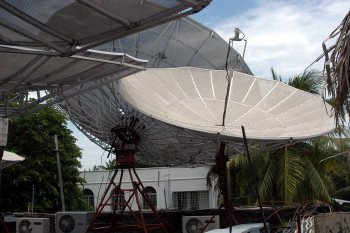
CAS is back! The Delhi High Court says Conditional Access System should be implemented in the three metros in four weeks. This means, if you are living in Delhi, Mumbai or Kolkata, you would need a set-top box to view pay television channels from April 1. In Sept 2004, when CAS was introduced, Chennai was the only city in India then that complied with this regime. The other State Govts protested and refused conditional access for television viewing in their cities.
While the pros and cons of CAS, as a concept, has been debated to death, the HC order now brings the issue of implementation sharply into focus. A few pertinent questions - Will CAS get entangled in a legal mess yet again? Will broadcasters (like Star did last time) throw a spanner in the works? Most MSOs/last-mile cable operators, that I spoke to in Mumbai, cite the Chennai example as a model for emulating. However, the fundamental difference between Chennai and the rest of India, in terms of television viewing, is that popular mass entertainment channels are Free-To-Air… therefore, CAS was easier to enforce. This is not the case in the rest of the country. So will there be consumer resistance to CAS? Are MSOs/Last Mile Operators ready for a rollout in a month? This would mean sourcing STBs, offering reasonably priced schemes for rental/schemes for STBs etc. And who regulates implementation? The Telecom Regulatory Authority of India is toothless body without executive powers and unless the respective State Govts are willing to play ball, there is a hurdle there as well. Net net - a system that is designed to give the consumer the right to choose – once again runs the risk of becoming a casualty of vested interests and flawed implementation.
Wednesday, March 8, 2006
Varanasi and thereafter…
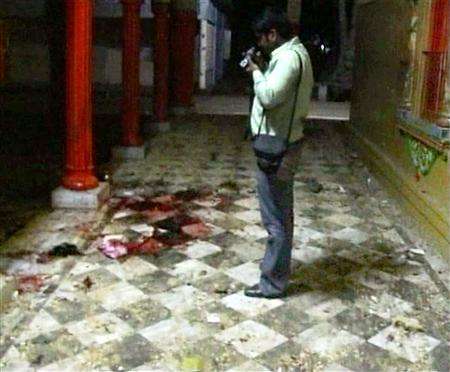 So here’s another bomb blast. Yet another case of ‘intelligence failure’. And as always, the Govt does its well-rehearsed charade of huddling into an emergency meeting after the incident, promises ‘immediate’ action to nab the culprits. Somehow, true to script, the next morning it guns down a ‘suspect’ on the outskirts of Delhi. He obviously has to have a Muslim name and ofcourse, his curriculum vitae has to boast of impressive brands. Interned at Jaish-e-Mohammed, headed Harkat-ul-ansar, militancy experience in J&K, has links to the dreaded Lashkar-e-Taiba. For all you know the bloke must have been roaming freely in Dhaula Kuan until yesterday, when the Delhi Police decided to use him for some target practice. Now why is that every militant who is shot dead/arrested has three or more aliases. And the cops do not even credit these terrorists with creativity in naming. Taste this: “We have apprehended a dreaded terrorist named Mohammed Yusuf alias Yusuf Mohammed alias Mohammed alias Professor Yusuf". And in the world of terrorist brands, the Lashkar is the undisputed number one. Even when in doubt, the India security agencies don’t seem to blink an eyelid before they point fingers at the LeT.
On a serious note, the attack in Varanasi brings the communal issue into sharp focus. Firstly, the blast will be viewed as an attack on the Hindu’s religious nerve center of Varanasi. That too, an attack on a Hanuman Temple – the monkey god who stands for strength, valour and courage. And that too, an attack during Aarthi time on a Tuesday. These facts are fodder enough for the Hindu right wing to rear its ugly head yet again. The scary consequence of this incident is that it brings communal tensions back in the reckoning. That’s exactly what the VHP and its ilk wanted. Didn't they?
Subscribe to:
Posts (Atom)